Walk into Alice Keck Park Memorial Garden from the Micheltorena Street side on any weekday morning and you will pass a stretch of pathway that used to trip people up. It doesn't anymore. The handrails are new. So is the companion seating near the benches, built wide enough for a wheelchair to sit alongside a friend rather than off to one side. If you have lived on the Upper East for a while, you probably already noticed the smoother walk to the pond. What you may not have clocked is the smaller, stranger thing happening one garden bed over: a 2,277-square-foot plot that Santa Barbara Botanic Garden planted from scratch a little over a year ago, and is now watching as closely as the neighborhood is.
That bed is not decoration. It's a test, run by an institution that walked away from this exact park decades ago and just came back to see if native planting can hold up in the most public, most trafficked green space the city owns.
What actually changed underfoot
The path work at Alice Keck Park wrapped last year, funded by a Community Development Block Grant that news coverage at the time put at $260,000 and the city's own project page lists at $265,000, with the difference likely coming down to what each source counted as in-scope. Either way, the money went toward removing uneven pathways and narrow travel routes, adding new handrails and signage, and creating a dedicated area near the pond so wheelchair users can get right up to the water rather than viewing it from a distance. Benches, light poles, and the perimeter fencing got a repaint.
Jazmin LeBlanc, the city's assistant parks and recreation director, put the reasoning simply when the work finished: "Things are aging out, things are changing in the park, and we are making that effort to keep the park looking at its best." The garden turned 46 this year, dedicated in 1980 after Alice Bertha Keck donated the land in 1975 with the condition that it stay a park in perpetuity. Forty-five years of foot traffic on stone paths adds up. This was maintenance, done well, and it's the kind of project that mostly disappears into daily use once it's finished. You stop noticing the new handrail within a few walks.
The corner where the Botanic Garden came back
The more interesting story is in the dirt, not the pavement. When the park was first designed, Santa Barbara Botanic Garden helped shape it, working alongside landscape architect Elizabeth Kellam de Forest in the years after the land transferred to the city. Then the Botanic Garden's direct involvement faded. For years, the connection was historical rather than active.
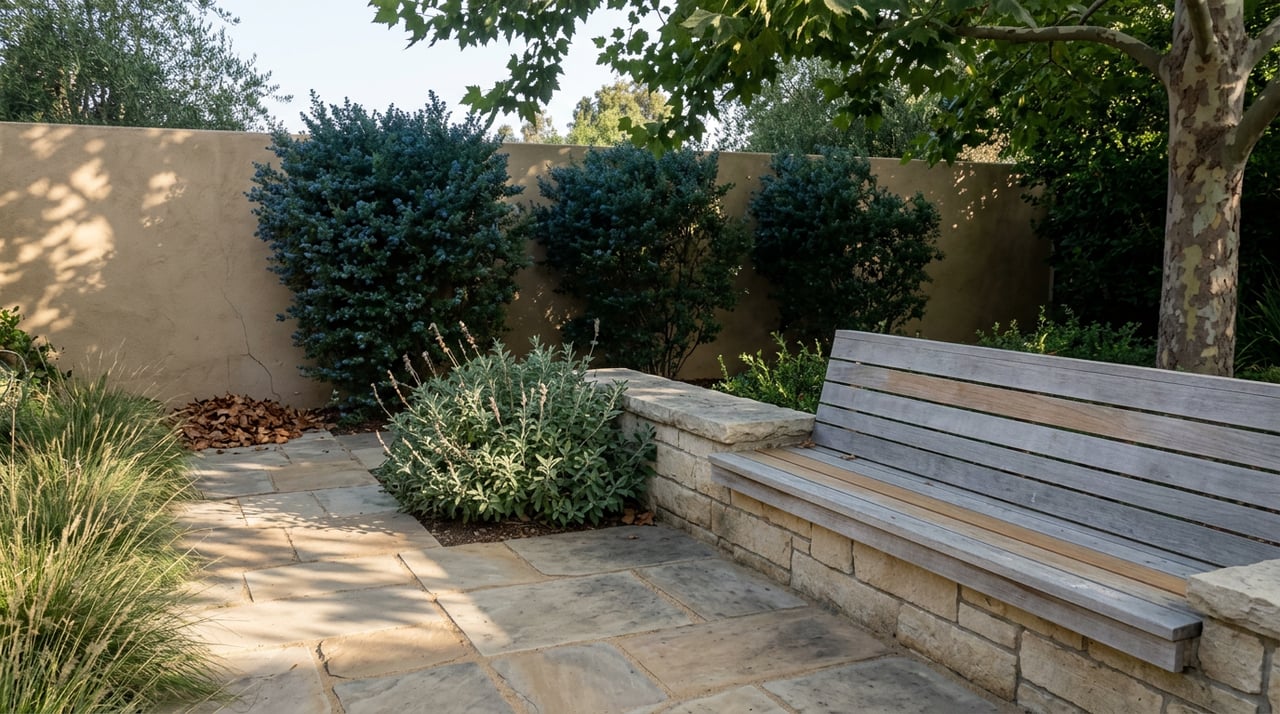
That changed in July 2025, when the Botanic Garden and the city's Parks and Recreation Department announced a new partnership: a dedicated native-plant bed inside Alice Keck Park, separate from the older low-water demonstration garden the park has featured for years. This one is specifically about California natives, not just drought tolerance in general, and the numbers are precise enough to suggest someone is tracking this closely. The bed covers 2,277 square feet and holds more than 168 plants across 14 species. Under the partnership terms, the Botanic Garden leads the design, fundraising, installation, and maintenance for at least five years, while the city supplies water and irrigation.
Steve Windhager, the Botanic Garden's executive director, framed the point of the project directly: "This project highlights the aesthetic and ecological value of native plants." That's a modest way to describe what is, in practice, a live demonstration running inside one of the most visited public gardens in the city, at a scale visitors can actually study bed by bed rather than imagine from a brochure.
Why this is the year to notice it
The timing is not incidental. Santa Barbara Botanic Garden marks its 100th year in 2026, having been founded in 1926 as the first botanic garden in the country dedicated exclusively to native plants. A project like the Alice Keck Park bed, planted right as the Garden entered its Centennial year, functions as a public-facing argument for everything the institution has spent a century building toward.
The Garden built its April programming around that argument. Native Plant Month brought a Home Garden Tour on April 18 that sold out, guiding visitors through private native-plant landscapes around the city and pointing them toward Alice Keck Park's bed as a public counterpart worth a visit on the same day. Then, on May 7, the Botanic Garden partnered with the Community Environmental Council for a downtown 1st Thursday event, where they debuted a short film about the Alice Keck Park bed made with local filmmaker Soraya Simi. A one-block planting project inside a neighborhood park now has its own documentary short and a sold-out companion tour. That's an unusual amount of institutional attention for a garden bed, and it tells you something about how much this particular experiment matters to the people running it.
The rest of the loop hasn't changed, and that's the point
None of this displaces what the park has always been. Gates still open at 6 a.m. and close at 7:30 p.m. daily, with no admission fee. The koi pond, the gazebo, the wisteria arbor in the Arbor Area near Arrellaga Street, the butterfly garden and sensory garden with its Braille signage, all of it is still exactly where it was. Cross Santa Barbara Street and you're at Alameda Park, with its Kids World playground, picnic tables, and restrooms, the practical stop most parents build into the same walk. The Santa Barbara Museum of Art's Ridley-Tree facility sits right across from the garden and runs classes there. A few more blocks brings you to the Mission Rose Garden and the Museum of Natural History, both inside the same stretch of neighborhood the Upper East Association was formed to look after.
That association, which counts roughly 230 member households, has spent years pushing on exactly this kind of infrastructure question elsewhere in the neighborhood, including an ongoing push for safer pedestrian and bike passage through lower Mission Canyon Road near the Mission and the Natural History Museum. The group sends four e-newsletters a year to members and one printed edition each autumn to the wider Upper East, the kind of local reporting that tends to catch changes like the park renovation well before they show up anywhere else.
How to actually watch it
If you want to see the native bed change through a full year rather than catching it once and forgetting about it, a few things are worth knowing:
- The park's volunteer program runs Wednesday through Friday, plus the first Saturday of each month, with drop-ins welcome and no experience required.
- Parks staff supply guidance on pruning, mulching, deadheading, and weeding for anyone who shows up.
- The Botanic Garden holds monthly hands-on events tied to the Landscape Transformation project, aimed at homeowners and casual visitors as much as trained gardeners.
- The bed is still early enough in its five-year commitment that this fall and winter will show real, visible change as the plantings mature past their first full year in the ground.
Most people who live near Alice Keck Park already treat it as a fixed point on the map, the place with the koi and the wedding arbor and the good morning light. It's worth walking it once this season with the smaller bed in mind. It's the one part of the park that isn't finished yet, on purpose, and watching what the Botanic Garden does with it over the next few years is a better use of a Saturday loop than most of what passes for neighborhood news.
If you're weighing a move to the Upper East or thinking about what a home near this stretch of the neighborhood is actually worth, Sharon Jordano knows this block the way a longtime resident does, not just as a listing description. Reach out to request a private home valuation and talk through what a property near this part of Santa Barbara means for your plans.